An old Solar System puzzle has a new explanation
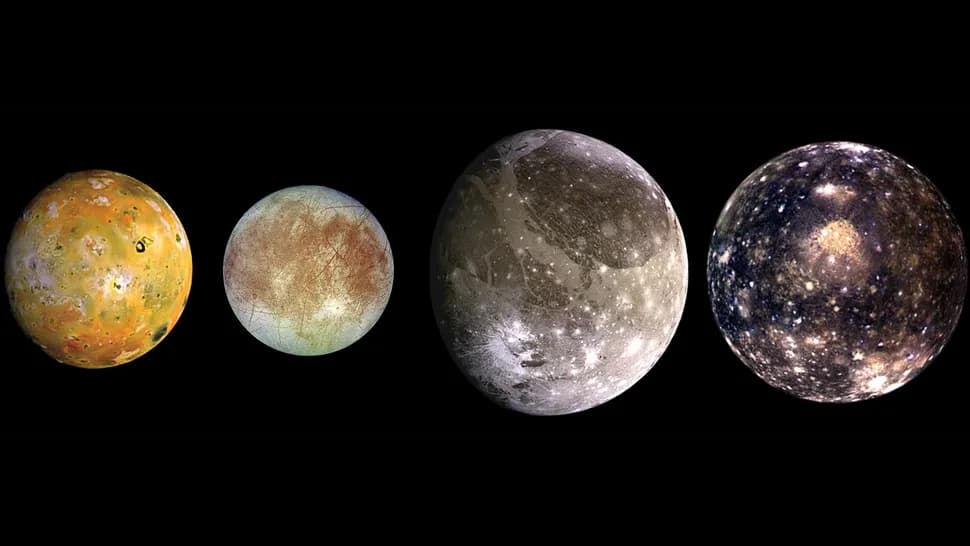
Jupiter and Saturn are both giant planets with extensive moon systems, but their largest satellites are distributed very differently. Jupiter has four major moons — Io, Europa, Ganymede, and Callisto — while Saturn’s system is dominated by one outsized moon, Titan. That contrast has long been difficult to explain because the two planets are both gas giants and are generally thought to have broadly similar formation histories.
A new study highlighted by researchers from Japan and China offers a physically consistent model for that difference. Their conclusion is that magnetic accretion, and specifically the formation of a magnetospheric cavity in a young gas giant’s accretion disk, can account for why Jupiter ended up with multiple large moons while Saturn did not.
The puzzle is not about total moon counts
The question is not whether Saturn or Jupiter has more satellites overall. The current count cited in the report says Jupiter has more than 100 moons, while Saturn has more than 280 known satellites. The striking issue is that Jupiter’s system contains four large moons, including Ganymede, the largest moon in the Solar System, whereas Saturn is dominated by Titan, the Solar System’s second-largest moon.
That mismatch matters because it suggests something about the early environments around the two planets was meaningfully different. If the broad ingredients of giant-planet formation were similar, then a process inside the circumplanetary disk may have nudged the systems toward very different end states.
Magnetic fields are moving toward the center of moon-formation theories
The team says scientists have been rethinking satellite formation models in recent years because of the role played by magnetic fields. In this framework, a planet’s magnetic field can influence how surrounding material falls inward and how structures form in the disk around the young planet.
To test that idea, the researchers performed numerical simulations of the interior structures of young gas giants and also modeled circumplanetary disks around both Jupiter and Saturn. Their goal was to examine how the thermal properties and magnetic fields of the two planets may have changed over time and how those differences could shape moon formation.
The result was a model that points to the formation of a magnetospheric cavity in a young gas giant’s accretion disk as a key mechanism. In simple terms, the cavity changes where material can accumulate and how satellites migrate or survive while the disk is still evolving.
Why Jupiter and Saturn may have diverged
According to the study, the magnetic and thermal histories of Jupiter and Saturn may not have been interchangeable, even if both planets formed in related ways as gas giants. If Jupiter developed disk conditions that supported the survival or orderly formation of multiple large satellites, while Saturn’s environment concentrated outcomes differently, that could explain why Jupiter preserved the Galilean moons as a four-body large-moon system.
Saturn’s outcome, by contrast, looks far more top-heavy. Titan stands apart as the system’s dominant large moon. The new model suggests that this was not just a random result of later collisions or chance, but may instead reflect the architecture of the circumplanetary disk itself during the planets’ youth.
That is a significant shift because it treats moon systems as products of disk physics linked to planetary magnetism, not merely scaled-down leftovers of planet formation. If correct, it gives astronomers a more unified way to think about why nearby satellite systems can be both related and dramatically different.
A local result with broader relevance
Lead researcher Yuri I. Fujii said testing planet formation theory is difficult because astronomers have only one Solar System for close reference, but they can still compare multiple nearby satellite systems with observable characteristics. That makes Jupiter and Saturn especially valuable laboratories.
The value of the work extends beyond explaining one Solar System curiosity. If magnetic accretion and magnetospheric cavities play a major role in how large moons form, similar ideas may help researchers interpret satellite systems around giant exoplanets as observational capabilities improve.
Even when astronomers cannot directly watch moons forming elsewhere, models grounded in the physics of disks, interiors, and magnetic fields can narrow the range of plausible histories. Jupiter and Saturn then become test cases for understanding what conditions generate multiple large satellites, what conditions favor one dominant moon, and how much of that outcome is written early.
What the new model changes
The study does not simply add another speculative factor to an already complex problem. It attempts to connect several pieces at once: the interior evolution of young gas giants, the behavior of their circumplanetary disks, and the role of magnetic fields in shaping where material goes. By doing that, it offers a mechanism rather than just a description of the difference between the two systems.
That matters because the Galilean moons and Titan are not small details of the Solar System. They are major worlds in their own right, and their existence reflects the processes that operated around the largest planets when the Solar System was still taking shape.
The new work suggests that the answer to why Jupiter has more large moons than Saturn may lie not in a single dramatic event, but in the invisible structure of the environment around each young planet. If so, the architecture of moon systems may be far more sensitive to magnetic conditions than older models assumed.
This article is based on reporting by Universe Today. Read the original article.
Originally published on universetoday.com